Over the past few years I've gotten interested in economics, and this summer I decided to finally go through an introductory econ textbook. It's a good way to learn. I go at my own pace, I can re-read the parts I don't understand, and I can do, or not do, as many of the problems at the end of each chapter as I think I will be helpful. Would taking an actual econ 101 course be better? Maybe, but maybe not.
Learning economics in this way makes me wonder, of course, about school. I think about the high school courses I teach, and I think, as usual, that we should try to have a lot of our students' learning be done through independent reading. But I also think about online college courses--MOOCs, to use the appropriately silly acronym. And I wonder--what's the point of a MOOC, when we already have books?
Of course, you might ask, what's the point of lectures, when we already have books. Lectures, as the name implies, started before there were printed books: the lecturer read his book/lecture notes, and the students copied down what he said, so that they could read and re-read it later, at their own pace. After Gutenberg, lectures weren't as important, but they continued for various reasons (people like watching people, there could be personal contact with the lecturer at other times, etc.). But as many college students have noticed, lectures are not a very good way of teaching. I skipped at least half of my lectures in college, and I did okay; I had the textbook.
So why MOOCs? And why now?
If watching someone like Michael Sandel is so great, we could already, before the internet, watch him on videotape or film. Why didn't community colleges in the seventies and eighties just show films, instead of hiring actual professors? Why are MOOCs happening now?
To answer that question would require going into a whole array of cultural shifts, but it's worth pointing out that places like Harvard and MIT are not, I don't think, going to outsource their teaching to virtual professors anytime soon. MOOCs, like so many other "disruptive" educational innovations, are a matter of providing a cheaper and shoddier product to the middle and lower classes, while providing ever more artisanal craftsmanship to the upper classes.
Showing posts with label Disruptive innovation. Show all posts
Showing posts with label Disruptive innovation. Show all posts
Tuesday, July 30, 2013

Sunday, June 9, 2013
If disruptive innovation is so great, how come the elite eat artisanal bread and cheese, drink artisanal wine and send their kids to artisanal schools?
Disruptive Innovation has been a big buzzword in business and tech circles for nearly two decades now, but it's only recently that people have started trying to apply it to education. The basic idea is that in any industry, the established players are focused on incremental improvements, and that big changes only happen when new producers enter the arena, usually with a shoddier but cheaper product that they sell to a new, untapped market. As I've written, this paradigm doesn't fit K-12 education very well, since there wouldn't seem to be a large untapped market available, and the market is fairly closed to new producers--but one way of seeing the Ed Reform movement is as an effort to open up the market, especially at the low end.
In a previous post, I argued that, seen in the light of disruptive innovation, ed reform was mainly about serving poor kids with shoddier products that cost less money. In this post, I discuss the flip side of disruptive innovation: the way in which our era, which has been famously amenable to disruptive innovation, is also quite amenable to its opposite: conservative, traditional artisanal products. These traditional artisanal products are not, however, aimed at the mass market, but at the high end.
The other problem with disruptive innovation: it's often not as good!
"Disruptive innovation" is discussed so much in the media that people tend to forget about the flip side of the shoddier/cheaper dynamic. In recent decades, a lot of people have also done very well by making things somewhat less cheaply but also of dramatically higher quality. You might call this "artisanal non-innovation." Especially among the elites in our society, and especially over the past few decades, as the rich have gotten richer and the wages of the bottom half have stagnated or fallen, there has been a movement back toward ultra-high-quality traditional products. This has been true in education as well, and there is no reason to think this trend won't continue.
Artisanal non-innovation
Artisanal non-innovation means going against the grain of our mass market economy and, inspired by a tradition and learning from its masters, trying to do things the old-fashioned way and do them really, really well. Artisanal non-innovation has been a fine business model both for those who don't need to grow (often family businesses, like Limmer boots)--and for those who do want to grow (Starbucks, for example).
Artisanal schools
Even as the powers that be promote "disruptive innovation" in education, nattering on about Baumol's disease and productivity, they are, of course, choosing artisanal schools for their own children. In New York City, private schools that used to be considered third-tier, schools that anyone with tuition could get into, are now seen as elite, and some of the elite schools are doing away with testing altogether. If they have to do test prep, they'll do it the old fashioned, artisanal way and get a tutor.
So it seems likely that what is coming in education, as in other areas, is a bifurcated America, in which the masses get sold lots of crappy test-prep products, and the elites, who cheerlead the crappiness of the crappy test-prep regime by calling it "disruptive innovation," will be choosing for their own children education that is ever more artisanal.
Other kinds of disruption
In other words, we public school teachers, parents and children will have this...

...and the elites will have this...
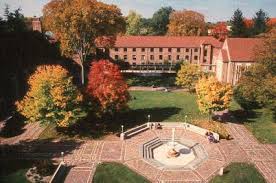
...until, perhaps, we get the more political kind of disruptive innovation that we haven't seen in this country for 80 years or so...
In a previous post, I argued that, seen in the light of disruptive innovation, ed reform was mainly about serving poor kids with shoddier products that cost less money. In this post, I discuss the flip side of disruptive innovation: the way in which our era, which has been famously amenable to disruptive innovation, is also quite amenable to its opposite: conservative, traditional artisanal products. These traditional artisanal products are not, however, aimed at the mass market, but at the high end.
The other problem with disruptive innovation: it's often not as good!
"Disruptive innovation" is discussed so much in the media that people tend to forget about the flip side of the shoddier/cheaper dynamic. In recent decades, a lot of people have also done very well by making things somewhat less cheaply but also of dramatically higher quality. You might call this "artisanal non-innovation." Especially among the elites in our society, and especially over the past few decades, as the rich have gotten richer and the wages of the bottom half have stagnated or fallen, there has been a movement back toward ultra-high-quality traditional products. This has been true in education as well, and there is no reason to think this trend won't continue.
Artisanal non-innovation
Artisanal non-innovation means going against the grain of our mass market economy and, inspired by a tradition and learning from its masters, trying to do things the old-fashioned way and do them really, really well. Artisanal non-innovation has been a fine business model both for those who don't need to grow (often family businesses, like Limmer boots)--and for those who do want to grow (Starbucks, for example).
Artisanal schools
Even as the powers that be promote "disruptive innovation" in education, nattering on about Baumol's disease and productivity, they are, of course, choosing artisanal schools for their own children. In New York City, private schools that used to be considered third-tier, schools that anyone with tuition could get into, are now seen as elite, and some of the elite schools are doing away with testing altogether. If they have to do test prep, they'll do it the old fashioned, artisanal way and get a tutor.
So it seems likely that what is coming in education, as in other areas, is a bifurcated America, in which the masses get sold lots of crappy test-prep products, and the elites, who cheerlead the crappiness of the crappy test-prep regime by calling it "disruptive innovation," will be choosing for their own children education that is ever more artisanal.
Other kinds of disruption
In other words, we public school teachers, parents and children will have this...
...and the elites will have this...
...until, perhaps, we get the more political kind of disruptive innovation that we haven't seen in this country for 80 years or so...
Friday, June 7, 2013
In education, "Disruptive Innovation" means new, worse schools
A couple of years ago Clayton Christensen, a professor at the Harvard Business School and the high priest of "disruptive innovation," was eagerly anticipating the rise of disruption in K-12 education, even suggesting that by 2019 "half of all classes for grades K-12 will be taught online." A more modest new white paper from Christensen's institute scales back these ambitious predictions, suggesting instead that what's coming is "hybrid" or "blended" innovation, in which novel methods will combine with elements of the old regime.
Perhaps it's a good thing that the Christensen institute is realizing that traditional schools have more staying power than previously suspected. Still, the new paper is an occasion to reconsider the whole idea of "disruptive innovation." After looking into it a bit, I think that if Christensen's first idea was a bit extreme, his basic idea is partly right: we are getting disruption in our schools--but in a bad way, not a good way.
What is "disruptive innovation"?
The basic idea behind "disruptive innovation" is that the status quo is upended by doing something (making cars or steel, providing music or movies, etc.) somewhat more shoddily but also dramatically more cheaply or conveniently. Clayton Christensen has made a career out of describing and glorifying this process, and it may be a useful way to think about a lot of things: the rise of the Japanese car-makers, for example, or of Netflix's streaming video business. Christensen, and many others, have predicted that the education status quo will soon be upended by disruptive innovation, usually imagined as some form of online learning. This may eventually happen, but there are some significant barriers to it, especially at the K-12 level.
Why disruptive innovation won't come naturally to K-12 education
Every year my alma mater's alumni magazine, which fancies itself a major force in journalism, publishes a list of 50 "disruptive companies"; this year, for the first time, an education company made the list. Predictably, the company was Coursera, which provides free online college courses, and not a company involved in K-12 education, which is particularly resistant to change.
Disruptive innovation typically requires one or both of the following: (1) low-end consumers; (2) new producers who are doing things differently. First, there has to be a market for the crappier product. Often the untapped market is in a niche where the crappier product is more convenient, like cell-phone cameras, or where the old product was exclusively expensive, as when personal computers displaced mainframes. In education, it is very clear that colleges and universities are ripe for disruptive innovation, since colleges are getting so expensive (to be sure, some of this is happening because states are defunding their own public universities). As for the second requirement, producers who are doing things differently, higher ed. has always had a fair amount of "churn," or Schumpeterian creative destruction, and there are naturally, then, lots of groups working on doing things differently: Coursera, EdX, etc. But K-12 education is fairly different from higher ed, and is less naturally open to disruptive innovation. K-12 education has not seen the same skyrocketing prices, it has a stable and in some sense captive consumer base, and doesn't have a significant sector of alternative producers to serve the (non-existent) low-end market.
It's interesting that K-12 education costs have been fairly stable. Despite Baumol's cost disease, which is supposed to lead things (like teachers) that are not amenable to technology improvements to become more expensive over time, teacher salaries have been pretty much flat since the early seventies; moreover, the cost of K-12 education has not, unlike that of higher ed or health care, increased as a share of GDP. So the low-end market that is required for disruptive education is nonexistent; to create it will require political action. Another thing that would be required is a significant sector of producers who are doing things differently. And in K-12 education, the only producers who are doing things differently are private operations (open schools like Sudbury Valley, homeschool operations like Calvert, etc.). In the traditional system, these private schools do not have access to the low-end market, which has been limited to public schools.
It's possible, then, to see Ed reform as a movement that is attempting to create the conditions for disruptive innovation by (1) creating a low-end market and (2) encouraging a new education sector that is, in Christensen's words, "remote from the mainstream." Ed Reform is creating a low-end market by starving districts of funding, partly by channeling funds to charters; and this heavy support of charter schools and vouchers, etc., it aims both to increase the number of education providers who are doing things differently and to allow them access to the low-end market.
In other words, in education disruptive innovation may mean a race to the bottom for our poorest kids, even as the rich go to ever-more artisanal schools
The reformers want to open up the education market to low-cost producers. This is a strategy that has not worked in any other country, and if the history of the free market in other products is any guide, even at its best we will end up with the poorest and most vulnerable children in our society being almost completely cut out.
The rich and powerful, on the other hand, will probably not send their kids to disruptively innovative schools. Because when it comes to services and human experiences (food, coaching, nature experiences, opera, education, etc.), the rich and powerful very rarely use the products of disruptive innovation. Rich people don't get take-out via their smartphones; they hire a personal chef. For rich people, the trend is not toward disruptive innovation, but toward artisanal non-innovation, and the same will probably be continue to be true of schools for the rich. More on that in another post.
Perhaps it's a good thing that the Christensen institute is realizing that traditional schools have more staying power than previously suspected. Still, the new paper is an occasion to reconsider the whole idea of "disruptive innovation." After looking into it a bit, I think that if Christensen's first idea was a bit extreme, his basic idea is partly right: we are getting disruption in our schools--but in a bad way, not a good way.
What is "disruptive innovation"?
The basic idea behind "disruptive innovation" is that the status quo is upended by doing something (making cars or steel, providing music or movies, etc.) somewhat more shoddily but also dramatically more cheaply or conveniently. Clayton Christensen has made a career out of describing and glorifying this process, and it may be a useful way to think about a lot of things: the rise of the Japanese car-makers, for example, or of Netflix's streaming video business. Christensen, and many others, have predicted that the education status quo will soon be upended by disruptive innovation, usually imagined as some form of online learning. This may eventually happen, but there are some significant barriers to it, especially at the K-12 level.
Why disruptive innovation won't come naturally to K-12 education
Every year my alma mater's alumni magazine, which fancies itself a major force in journalism, publishes a list of 50 "disruptive companies"; this year, for the first time, an education company made the list. Predictably, the company was Coursera, which provides free online college courses, and not a company involved in K-12 education, which is particularly resistant to change.
Disruptive innovation typically requires one or both of the following: (1) low-end consumers; (2) new producers who are doing things differently. First, there has to be a market for the crappier product. Often the untapped market is in a niche where the crappier product is more convenient, like cell-phone cameras, or where the old product was exclusively expensive, as when personal computers displaced mainframes. In education, it is very clear that colleges and universities are ripe for disruptive innovation, since colleges are getting so expensive (to be sure, some of this is happening because states are defunding their own public universities). As for the second requirement, producers who are doing things differently, higher ed. has always had a fair amount of "churn," or Schumpeterian creative destruction, and there are naturally, then, lots of groups working on doing things differently: Coursera, EdX, etc. But K-12 education is fairly different from higher ed, and is less naturally open to disruptive innovation. K-12 education has not seen the same skyrocketing prices, it has a stable and in some sense captive consumer base, and doesn't have a significant sector of alternative producers to serve the (non-existent) low-end market.
It's interesting that K-12 education costs have been fairly stable. Despite Baumol's cost disease, which is supposed to lead things (like teachers) that are not amenable to technology improvements to become more expensive over time, teacher salaries have been pretty much flat since the early seventies; moreover, the cost of K-12 education has not, unlike that of higher ed or health care, increased as a share of GDP. So the low-end market that is required for disruptive education is nonexistent; to create it will require political action. Another thing that would be required is a significant sector of producers who are doing things differently. And in K-12 education, the only producers who are doing things differently are private operations (open schools like Sudbury Valley, homeschool operations like Calvert, etc.). In the traditional system, these private schools do not have access to the low-end market, which has been limited to public schools.
It's possible, then, to see Ed reform as a movement that is attempting to create the conditions for disruptive innovation by (1) creating a low-end market and (2) encouraging a new education sector that is, in Christensen's words, "remote from the mainstream." Ed Reform is creating a low-end market by starving districts of funding, partly by channeling funds to charters; and this heavy support of charter schools and vouchers, etc., it aims both to increase the number of education providers who are doing things differently and to allow them access to the low-end market.
In other words, in education disruptive innovation may mean a race to the bottom for our poorest kids, even as the rich go to ever-more artisanal schools
The reformers want to open up the education market to low-cost producers. This is a strategy that has not worked in any other country, and if the history of the free market in other products is any guide, even at its best we will end up with the poorest and most vulnerable children in our society being almost completely cut out.
The rich and powerful, on the other hand, will probably not send their kids to disruptively innovative schools. Because when it comes to services and human experiences (food, coaching, nature experiences, opera, education, etc.), the rich and powerful very rarely use the products of disruptive innovation. Rich people don't get take-out via their smartphones; they hire a personal chef. For rich people, the trend is not toward disruptive innovation, but toward artisanal non-innovation, and the same will probably be continue to be true of schools for the rich. More on that in another post.
Subscribe to:
Posts (Atom)